Tuesday afternoon, 2:00 PM. The kitchen table feels like a battlefield. Three different subjects are open, the laundry is humming, and you realize you have spent the last hour acting more like a drill sergeant than a mother.
If you are just figuring out how to start homeschooling, or if you are three months in and wondering if you made a mistake, please take a breath. You are not failing. You are simply carrying a load that was meant to be shared. Watching your child move from frustration to discovery is the gift of this journey, but it requires a shift in how you view “school.”
Many families decide to exit the public school system for reasons that go far beyond academics. You might be tired of the social anxiety and pressure that weighs on your child. You might be exhausted by a system that feels like it is trying to indoctrinate your children, leaving you to spend your evenings “undoing” ideologies they brought home.
The desire to weave your faith back into your everyday routine is a powerful calling. When you feel that spark of doubt, remember why you started. You were inspired to do this for a reason. Embracing that initial “fire” helps you stay grounded when the days get long.
If you are ready to start homeschooling but feel paralyzed by the logistics, follow these four phases to transition your family with peace.
Before you buy a single pencil, check your state’s requirements. Some states require a simple “Letter of Intent,” while others have specific testing or portfolio rules. I always suggest visiting the Home School Legal Defense Association HSLDA.org to see the exact laws for your area. Knowing you are “legal” is the first step to sleeping better at night.
If you are pulling your child out of a traditional classroom, before you start homeschooling, you both need time to reset. I tell new parents to spend the first month deschooling. This means no formal curriculum. Spend your mornings at the library, go for walks, and simply talk to each other. You are moving from a “system” to a “relationship,” and that takes time to adjust.
When you are ready to start lessons, do not try to tackle seven subjects on day one. Pick one.
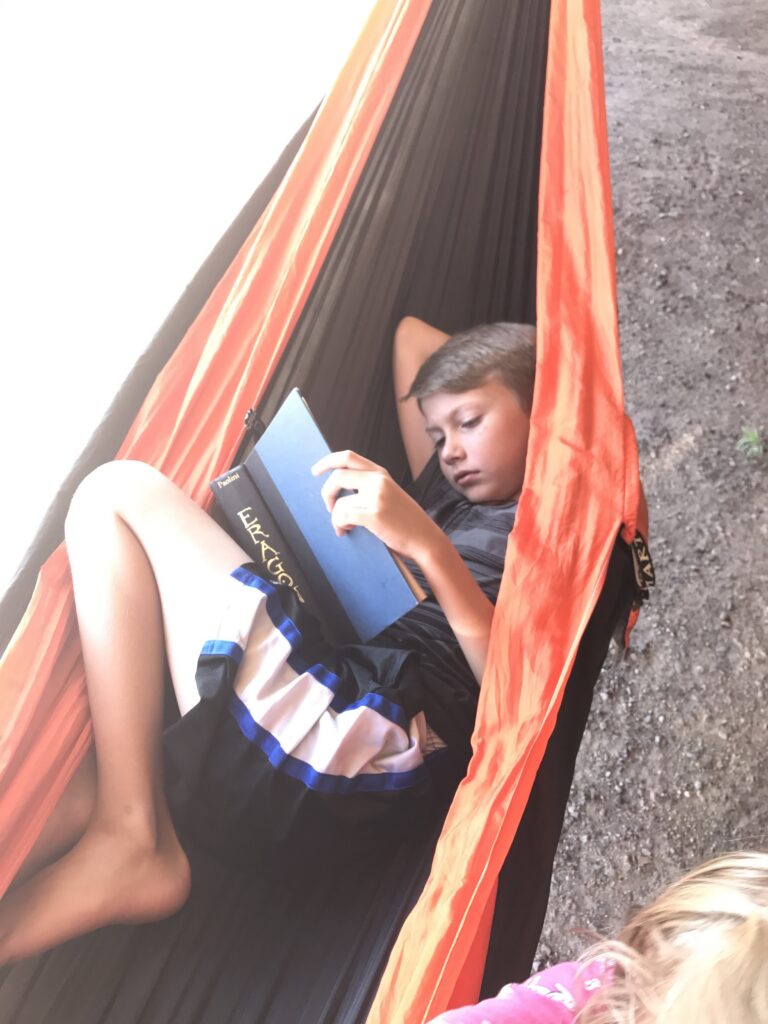
You do not need a dedicated school room with a whiteboard. In our 20 years, we have done our best learning in hammocks, on the grass, or at the local park. Your “how-to” is less about furniture and more about availability. Being available to listen is the most important “tool” you have.
Socialization is often the first thing people worry about when they consider homeschooling. However, you will quickly find a community of like-minded people. Your children can still participate in dance, sports, choir, or church activities.
The difference is that you are now the one guiding their social development. I recently took my ten-year-old daughter to a business meeting. Before we walked in, I explained how to look a banker in the eye and give a firm handshake. You are teaching them how to navigate the real world, not just a school hallway.
I have been on this journey for twenty years. We have navigated the challenges of raising six children, including caring for two children with special needs through surgeries and hospital stays. Even on the hardest days, my children turned out okay.
On the days when things feel messy, remember that it is okay to suck, but it is not okay to skip. Simply sitting in a hammock and reading together is a victory. I have often asked parents who are on the fence: “Do you really think you will do a worse job than the public school?”
The fruit of this journey is worth the struggle. My oldest son is currently acing his first semester of college, and my daughter is preparing to pursue business law. I do not regret a single moment of choosing this path.
If you are feeling the weight of the journey today, we would love to walk beside you. Our live classes at WonderWell Learning are designed to give you a break while your child engages in deep, inquiry-based discovery.
Explore our Live Saturday Classes here to see if our classes are the right fit for your family. We keep the groups small so that every child is seen, heard, and encouraged.